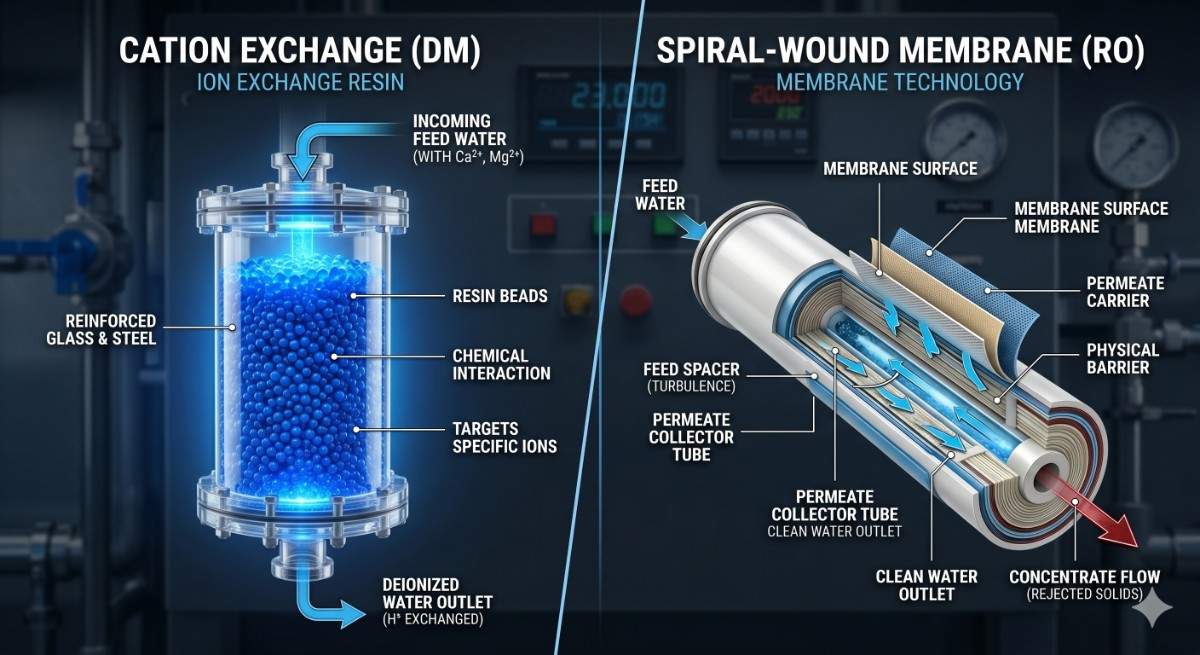
While both systems remove dissolved solids, their methods and results are fundamentally different. Reverse Osmosis (RO) relies on high pressure and semi-permeable membranes (pictured right) to reject a broad spectrum of ions, organics, and bacteria. It is the gold standard for bulk desalination. Demineralization (DM), often utilizing ion exchange resin columns (pictured left), targets specific ions through a chemical exchange, replacing captured mineral ions with hydrogen and hydroxyl ions to produce water of near-zero conductivity. This technical post helps industries choose the right process, especially when deciding between high-pressure boiler feed vs. general process water requirements.
← Back to blog
📖 Editorial / Article
DM Plant vs. RO System: Which One Does Your Industry Need?
📅 14 April 2026•⏱ 1 min read•🏢 Tara Enterprises
Compare Demineralization (DM) and Reverse Osmosis (RO) technologies. Find the best fit for your specific industrial water quality needs.
🖼 Featured Image
📚 Continue reading
Related blogs
📅 14 April 2026
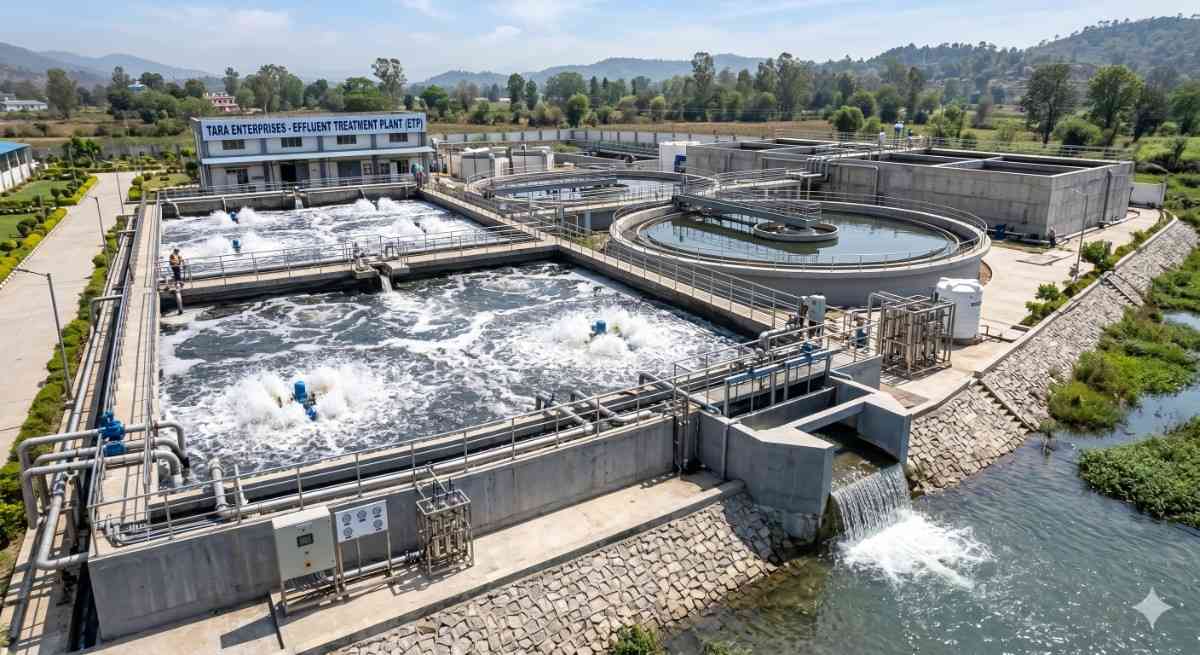
Why Industries Need Advanced Effluent Treatment (ETP)
Ensure your factory meets strict environmental norms. Tara Enterprises provides custom-engineered ETP solutions for Baddi’s diverse industrial manufacturing sector.
📖 Read more →
📅 14 April 2026
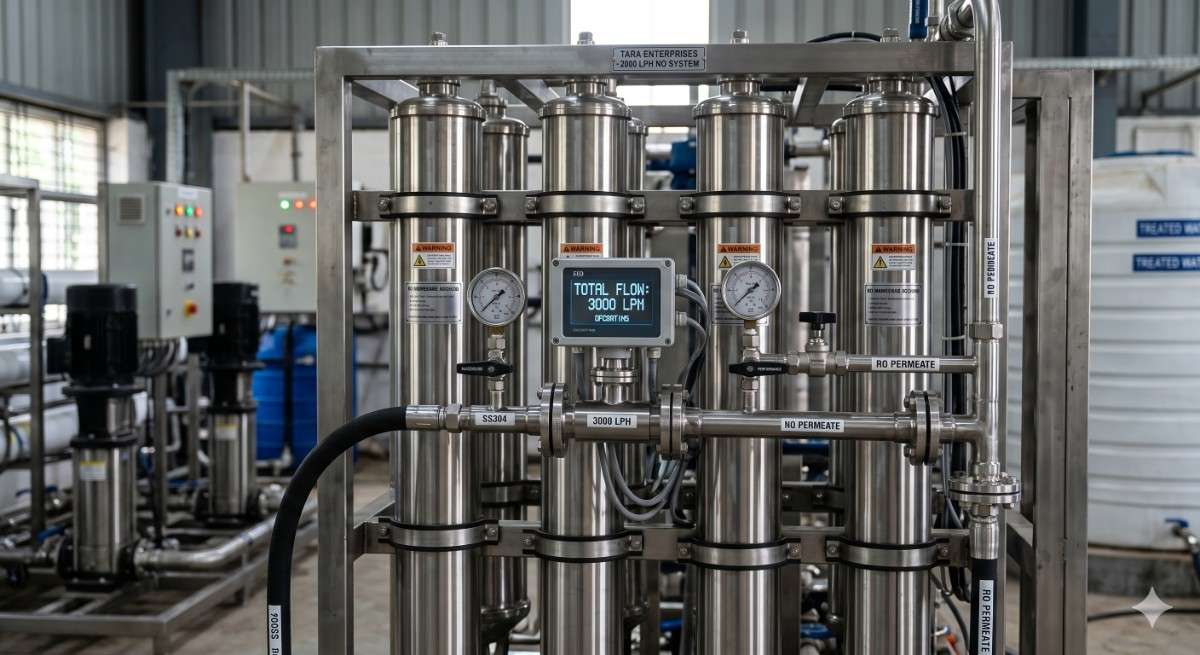
The Ultimate Guide to RO Plant Maintenance
Learn the essential maintenance steps to keep your industrial RO plant running at peak efficiency and prevent membrane fouling.
📖 Read more →