Ion Exchange Resins (Cation & Anion)
Achieve zero-hardness and ultra-pure water with our High-Capacity Ion Exchange Resins. From Strong Acid Cation for softening to Mixed Bed Resins for pharmaceutical grade DM water, we supply the chemical media that drives North India's industrial plants.
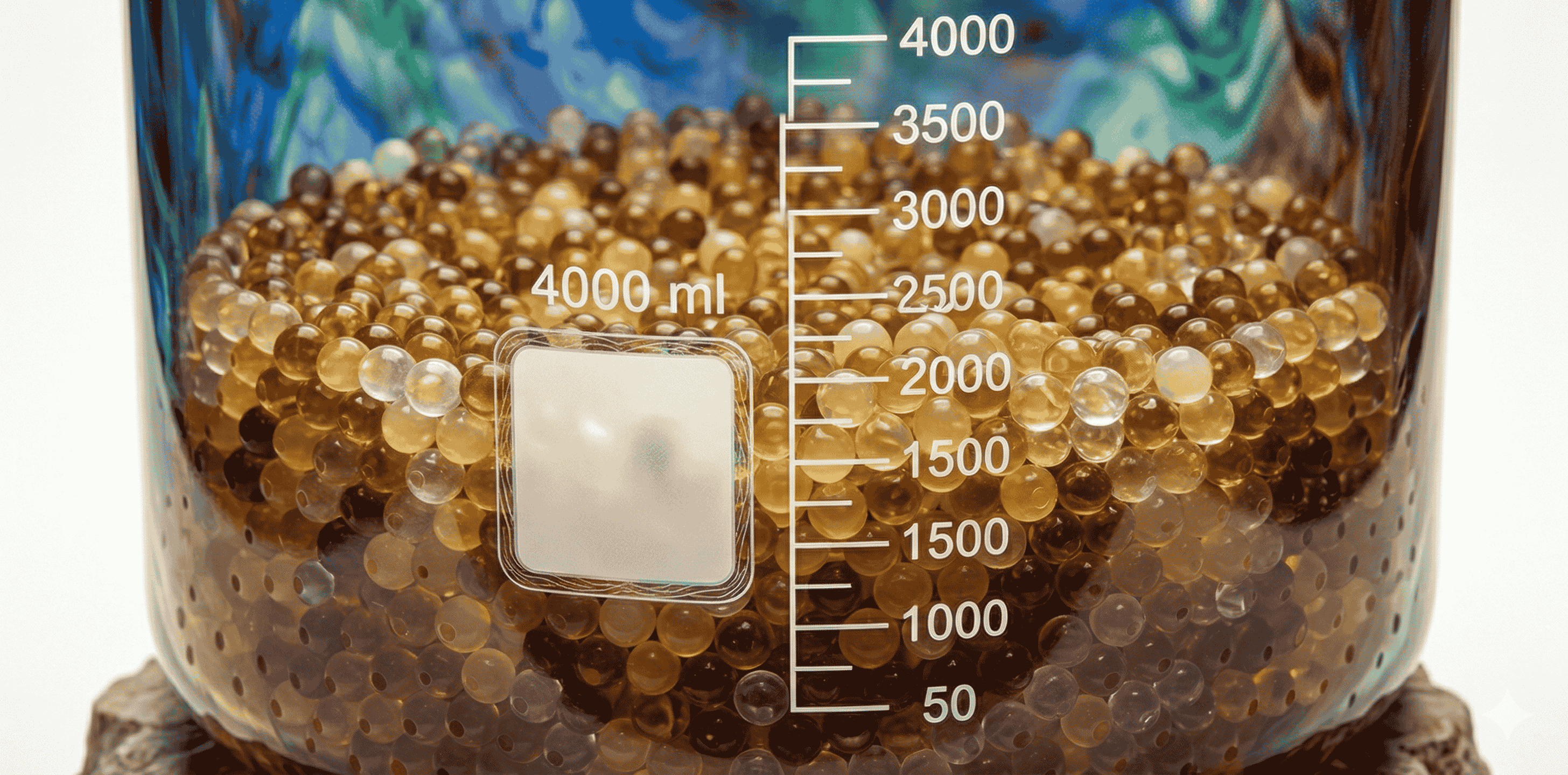
Superior Demineralization Media
Resin quality determines the time between regenerations. We provide Gel and Macroporous resins that offer excellent physical stability and chemical resistance, ensuring a long service life for your water softeners and deionizers even under heavy industrial loads.
- Uniform Bead Size for Low Pressure Drop
- Rapid Exchange Kinetics for High Flow Rates
- Exceptional Resistance to Organic Fouling
- Easy Regeneration with Brine, HCl, or NaOH
- Compliance with International Food/Water Standards
- Available in SAC, WAC, SBA, and WBA Types
Resin Portfolio
- ✔ Strong Acid Cation (Sodium/Hydrogen Form)
- ✔ Strong Base Anion (Type I & Type II)
- ✔ Mixed Bed Resins (Ready-to-Use)
- ✔ Weak Acid & Weak Base Resins
- ✔ Iron & Heavy Metal Removal Resins
- ✔ Color Removal Resins for Process Fluids
Technical Specifications
| Matrix Structure | Cross-linked Polystyrene Divinylbenzene |
| Exchange Capacity | Cation: 1.8 - 2.0 eq/L | Anion: 1.0 - 1.3 eq/L |
| Physical Form | Spherical Moist Beads |
| Moisture Content | 45% - 55% (Varies by type) |
| Standard Packaging | 25 Litre HDPE Bags |
Selection Guide
| Resin Type | Application | Key Output |
|---|---|---|
| Cation (Softening) | Water Softeners | Zero Hardness Water |
| Cation (H+ Form) | DM Plant (1st Column) | Decationized Water |
| Strong Base Anion | DM Plant (2nd Column) | Demineralized Water |
| Mixed Bed (MB) | Polishing Unit | Ultrapure / Zero Conductivity |
Premium Resin Solutions for DM & Softening
Sustain your water quality with high-purity resins designed for North India's varied groundwater chemistries, available in bulk at Baddi.
Tara Enterprises is a prominent stockist of Ion Exchange Resins in Baddi, providing critical media for the pharmaceutical and boiler operations industries. Our resins are selected for their high volumetric capacity, meaning fewer regeneration cycles and lower chemical consumption for your plant.
For the ultra-pure water requirements of pharmaceutical manufacturing, our Mixed Bed Resins ensure that the final conductivity remains below 1.0 µS/cm, meeting stringent pharmacopoeia standards.
High Bead Strength
Minimal bead breakage during backwash ensures longer resin life and lower top-up costs.
Optimized Kinetics
Fast ion uptake allows for shorter contact time and smaller vessel footprints.
Regeneration Efficiency
Engineered for high chemical efficiency, reducing the salt or acid required per cycle.
Silica Removal
Special SBA resins optimized for maximum silica removal in high-pressure boiler feed.
Whether you are performing a Full Resin Change-out or just adding a top-up, we provide the technical data and onsite support to ensure your bed depth and regeneration flows are optimized for maximum yield.
Softener Services
Is your softener failing to give zero-hardness? We offer resin health checks and bed cleaning chemicals to restore your system's capacity.
Call Service DeskFrequently Asked Questions
How long does Ion Exchange resin last?
In typical industrial applications, Cation resin lasts 5-7 years, while Anion resin typically lasts 3-5 years. Chlorine and high temperatures can significantly shorten this lifespan.
What is the difference between Gel and Macroporous resin?
Gel resins have a higher capacity and are suitable for clean water. Macroporous resins have a more robust structure, better for handling organics and high temperatures.
Can I mix different brands of resin?
While possible if the specifications match, we recommend against mixing different brands as the bead sizes and exchange kinetics may vary, leading to uneven pressure drops.
Why is my resin bed losing capacity?
Loss of capacity is usually caused by 'fouling' (from iron, organics, or oil) or physical bead breakage. Regular backwashing and pre-treatment maintenance are essential.